The Complete List Of Basic Karate Stances
Seiza
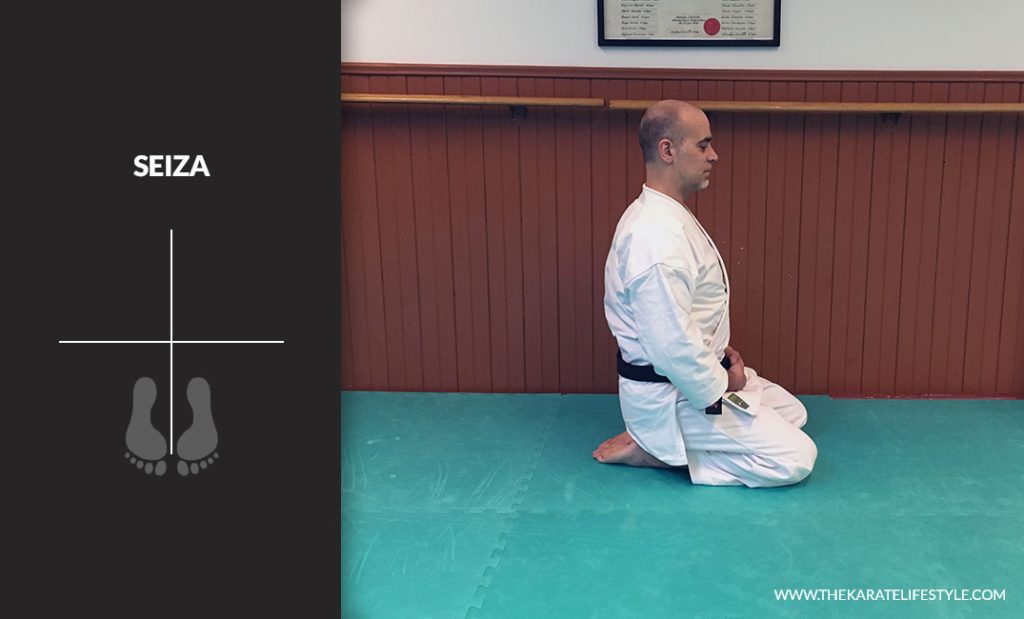
Kanji: 正座
English: Kneeling stance (litt. proper sitting)
Description: Seiza is the traditional, the formal and polite Japanese way of sitting on the floor, kneeling. It’s a fundamental posture is both Karate and in the Japanese culture. This stance is used to perform the formal ‘floor bow’ called zarei.
Musubi-dachi
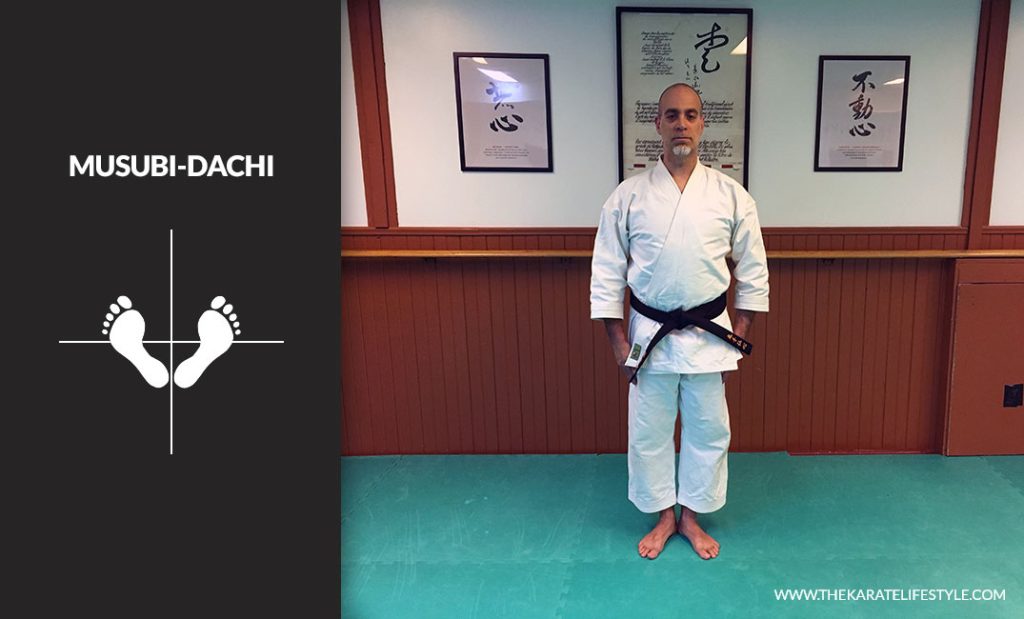
Kanji: 結び立
English: Standing stance
Description: Musubi-dachi is the formal way of standing in Japanese martial arts and in Japan. This stance is very important and is used to perform the formal respectful bow called rei. Musubi-dachi and rei should be performed before and after warmups, kihon, kata, kumite or any interaction between people.
Heisoku-dachi
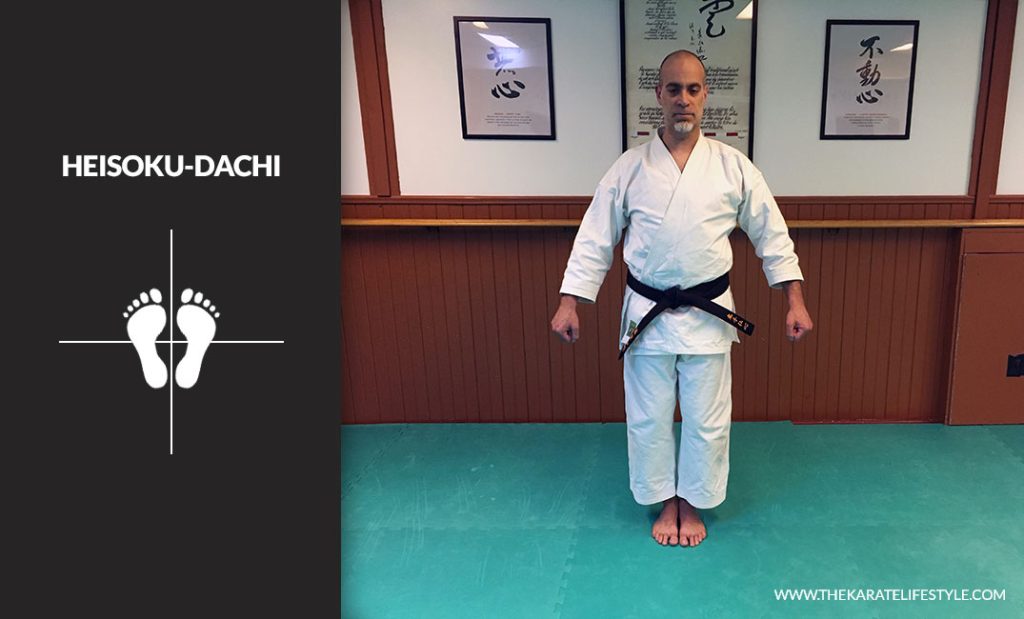
Kanji: 閉足立
English: Closed leg stance
Description: Heisoku-dachi is the ready stance used in some kata. It is similar to musubi-dachi, but the feet are kept together.
Heiko-dachi
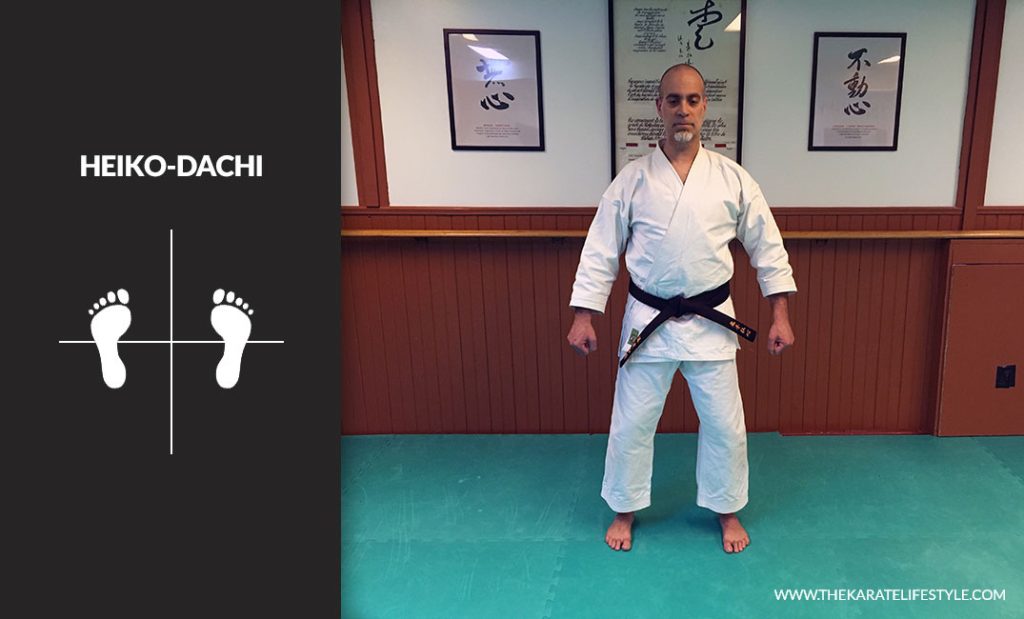
Kanji: 平行立
English: Parallel stance
Description: Heiko-dachi is an attention stance or “get ready’ stance used in some styles. It is generally performed after bowing (musubi-dachi), right before kihon practice or kata. Heiko-dachi is also the stance performed when listening to instructions.
Hachiji-dachi
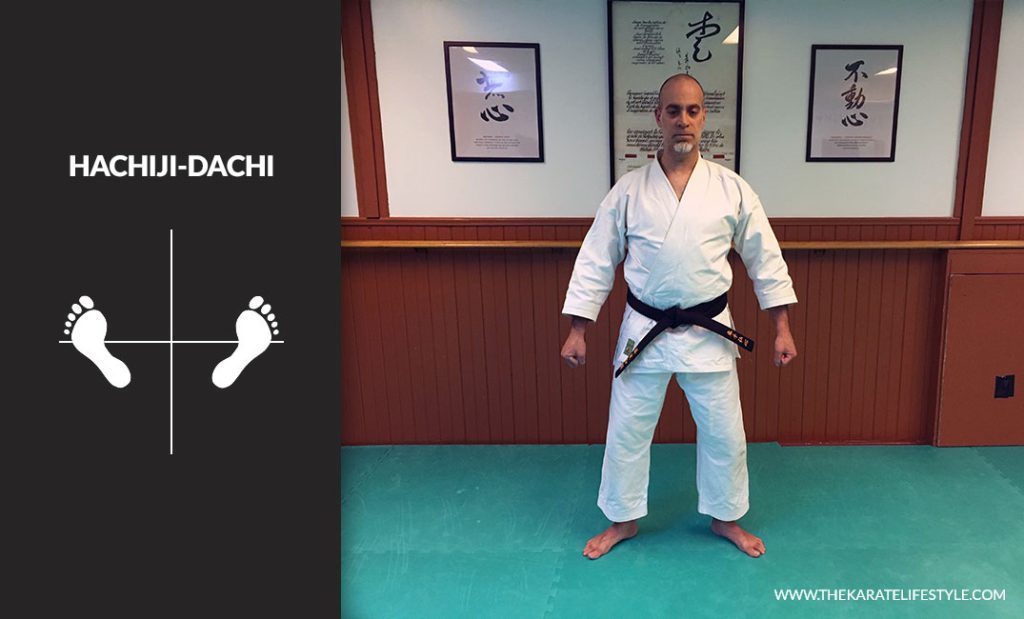
Kanji: 八字立
English: Natural stance
Description: Hachiji-dachi, also known as yoi-dachi is a formal waiting posture used in some styles of Karate. Hachiji-dachi can also be used after standing bowing of while performing tsuki. ‘Yoi’ posture is not common in Okinawan Karate.
Kiba-dachi (Japan) / Naihanchi-dachi (Okinawa)
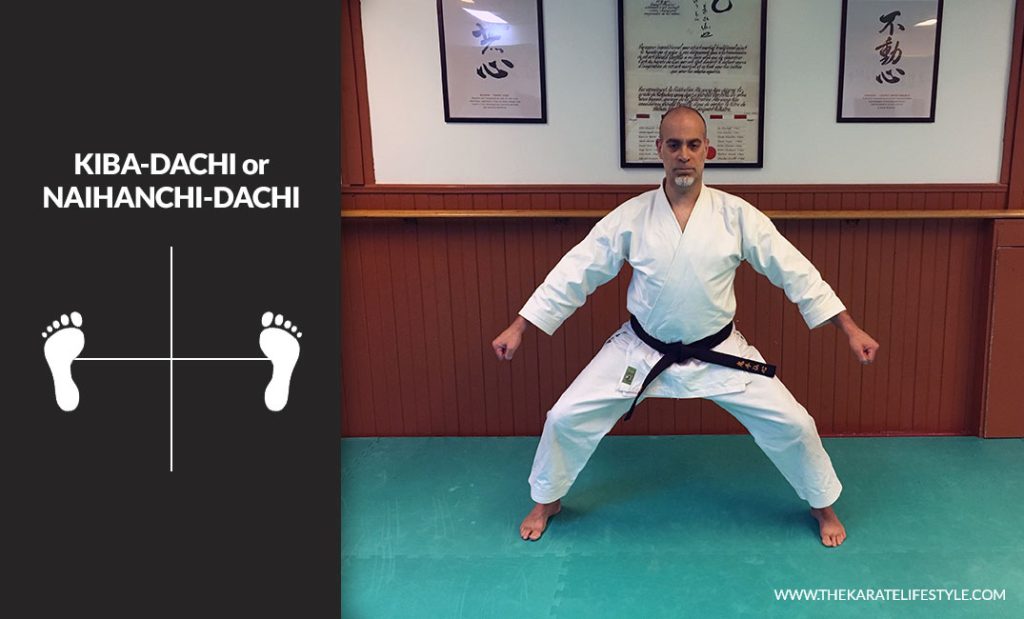
Kanji: 騎馬立 / 內步進立
English: Horse stance
Description: Kiba-dachi is a fundamental position of Karate that not only used to practice basic strikes like the seiken tsuki, but that can be integrated into self-defense or kumite practice as well. This is a very strong stance for defending against side attacks. Kiba-dachi is a posture that strengthens the legs, the back and to some extent, the core. There are some minor variation of kiba-dachi from schools, such as the distance between the feet, and the height of the stance. Japanese styles tends to perform kiba-dachi low and wide, whereas Okinawan styles use a higher and narrower version of it.
Shiko-dachi
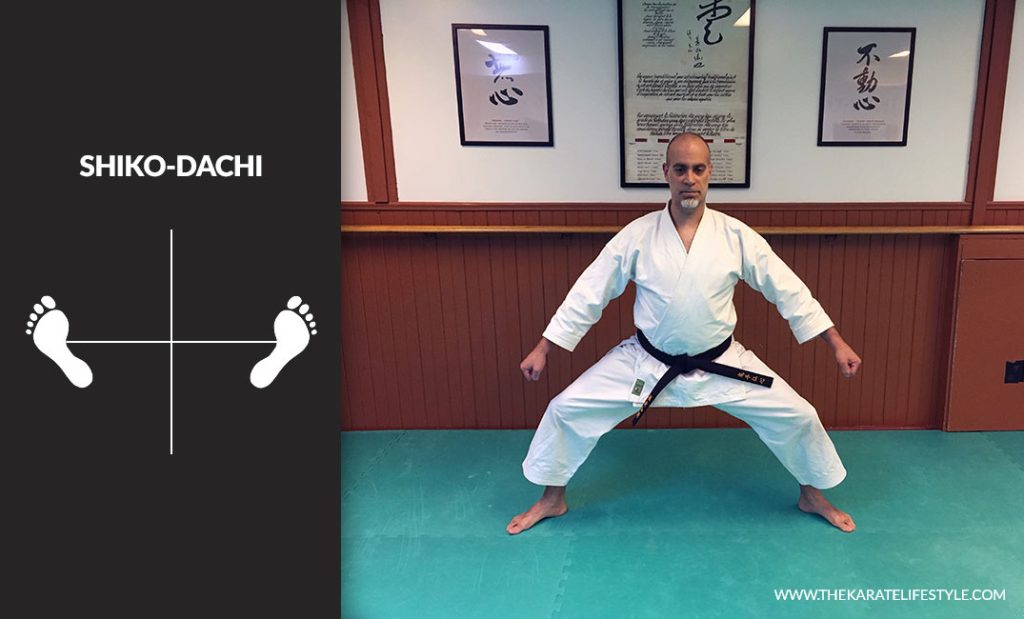
Kanji: 四股立
English: Horse stance, open feet
Description: Shiko-dachi, also known as the ‘square stance’ is pretty much the same as Kiba dachi but the feet are open at about 45° angle.
Sanchin-dachi
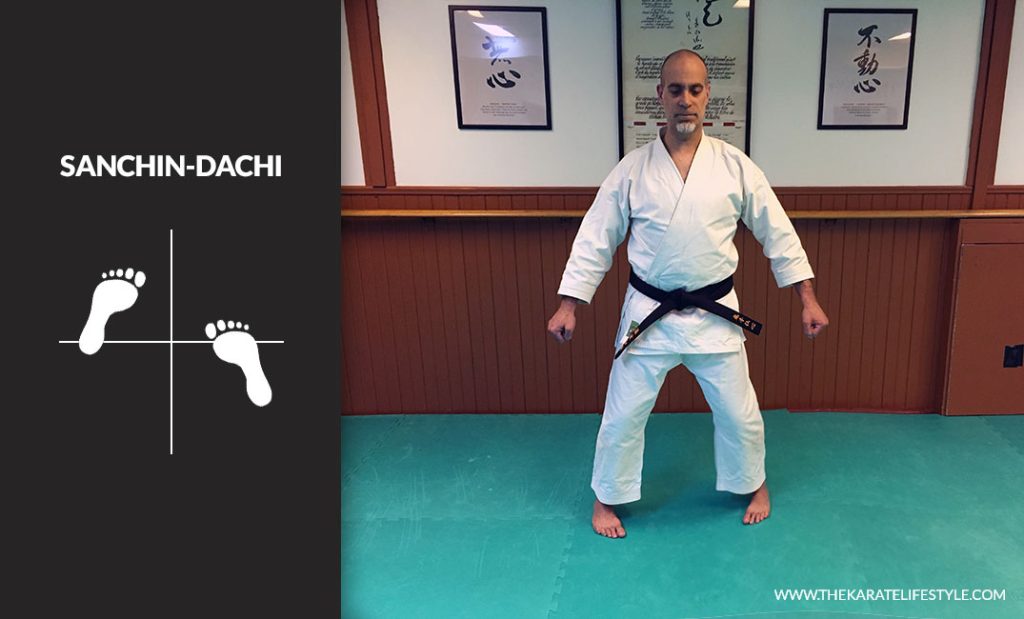
Kanji: 三戦立
English: Three battle stance, hourglass stance
Description: Sanchin-dachi is a fundamental Karate posture that offers great stability and rooting. The majority of Japanese styles like Shotokan use this stance only in kata, but Okinawan styles uses it for self-defense and kumite, particularly Naha-te styles like Goju-Ryu and Uechi-Ryu.
Zenkutsu dachi
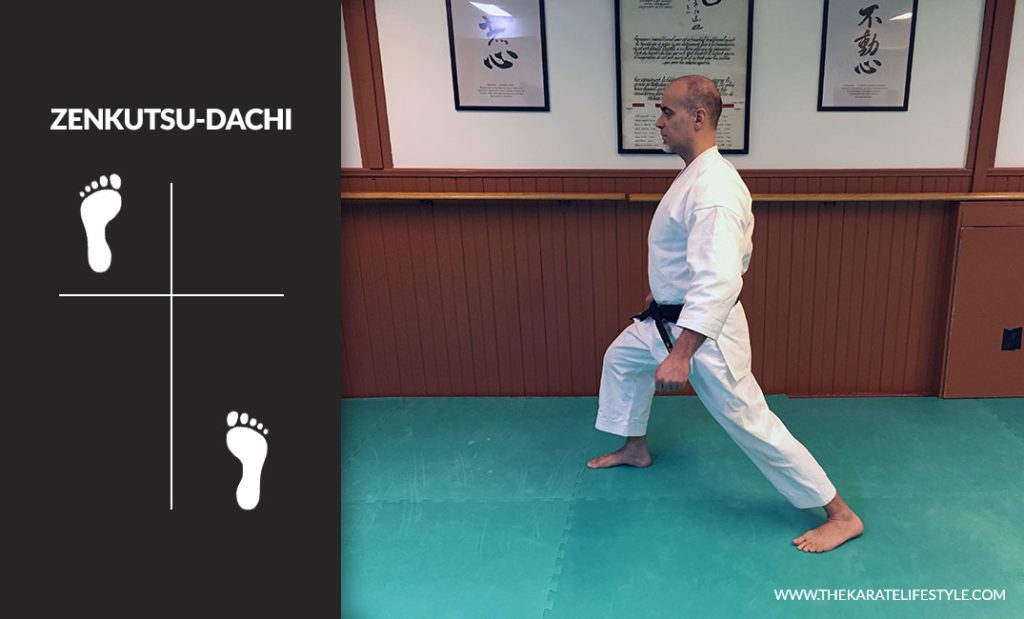
Kanji: 前屈立
English: Front stance
Description: Zenkutsu-dachi, a.k.a. forward stance, is one of the most common stances in Karate. It’s a stance that allows you to reach far and generate a great deal of power generation moving forward. Like with most stances, the Japanese version of Zenkutsu-dachi tends to be very long and wide compared to the shorter, more natural Okinawan version. Zenkutsu-dachi is a stance used as a conditioning exercise, not for self-defense nor kumite. The “long” version is a stabilizing stance that strengthens and tones the thighs, hips and glutes.
Han Zenkutsu-dachi
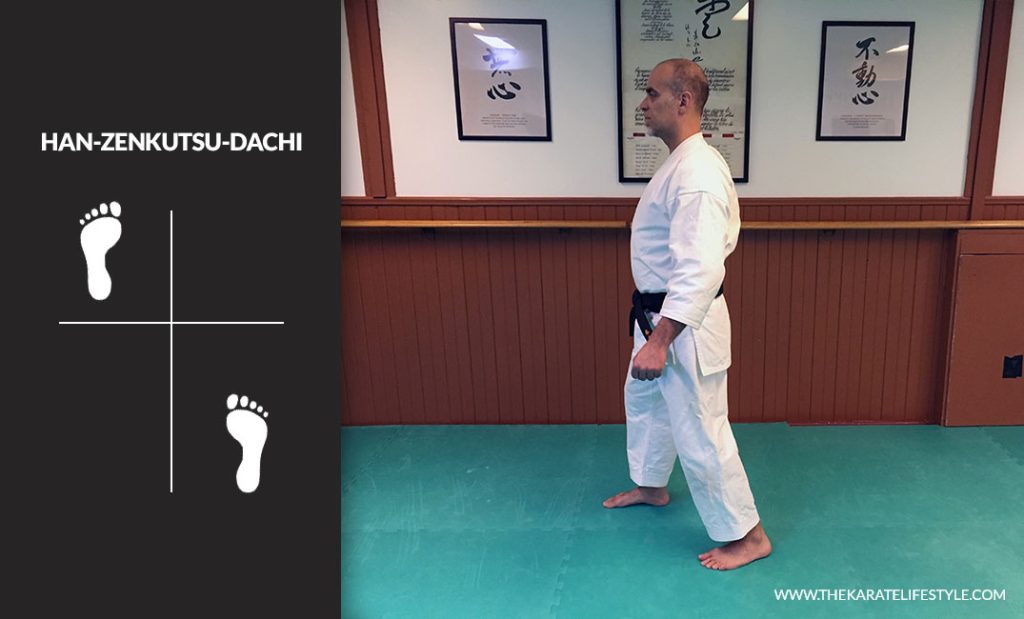
Kanji: 半前屈立
English: Half front-stance
Description: Han Zenkutsu-dachi is the shorter or half version of Zenkutsu-dachi. It’s a stance suitable for self-defense and kumite or sparring as it offers greater mobility. Han Zenkutsu-dachi is a neutral stance that allows you to quickly move back into the defensive Neko-ashi-dachi or the thrust forward into a full Zenkutsu-dachi or Sanchin-dachi.
Fudo-dachi
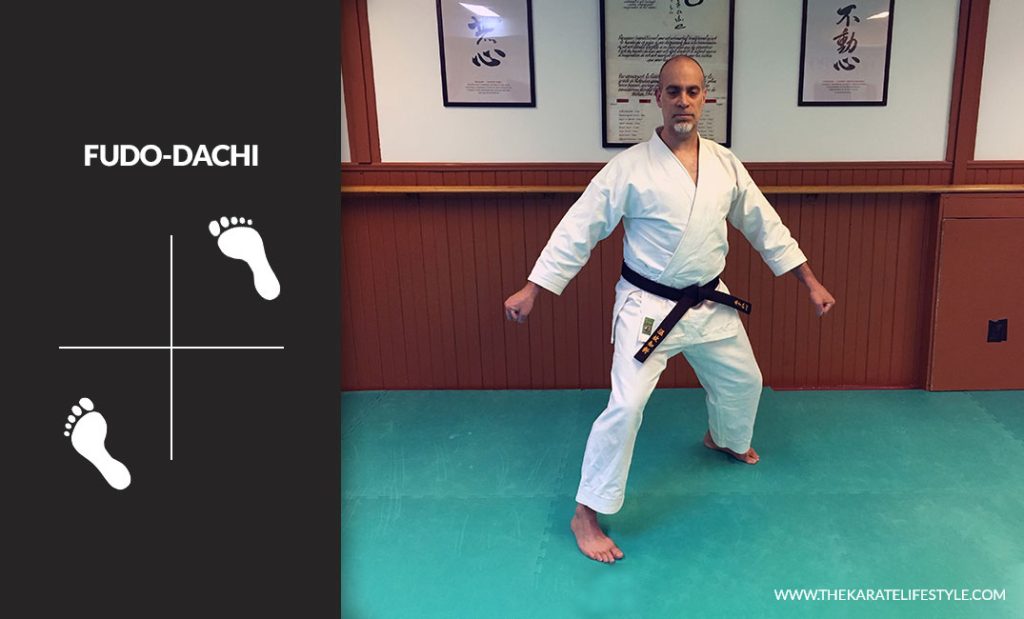
Kanji: 不動立
English: Immovable stance
Description: Fudo-dachi is a rooted stance that looks pretty much like a combination of Zenkutsu-dachi and kiba-dachi. Contrary to Sanchi-dachi, another rooted stance, it’s not ideal for mobility.
Kokutsu-dachi
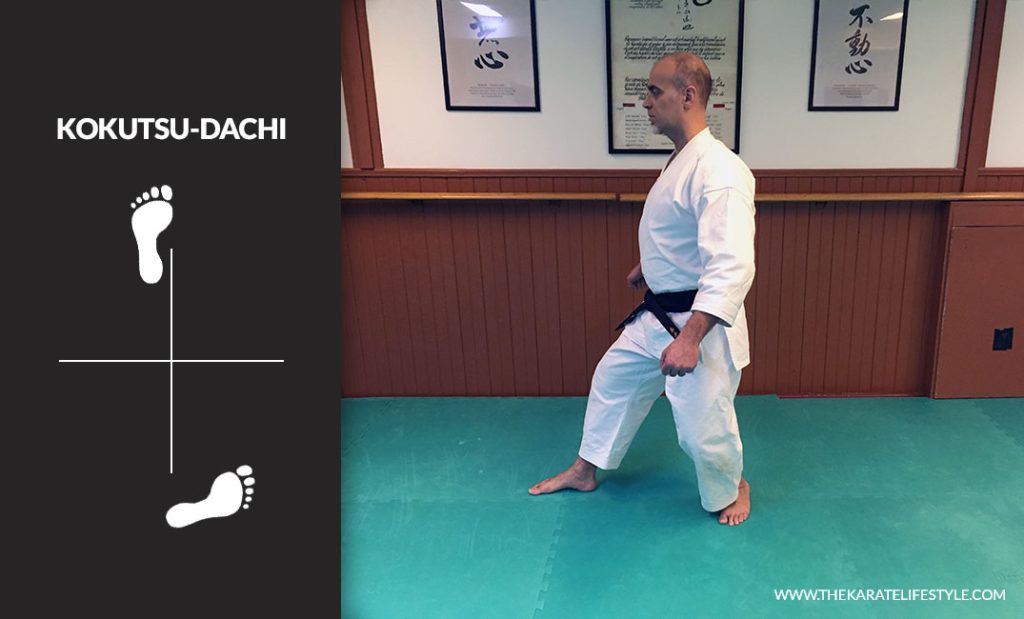
Kanji: 後屈立
English: Back stance
Description: Kokutsu-dachi is a defensive position that allows you to quickly retreat or move back and counterattack. It’s great to evate attack from your opponent.
Neko-ashi-dachi
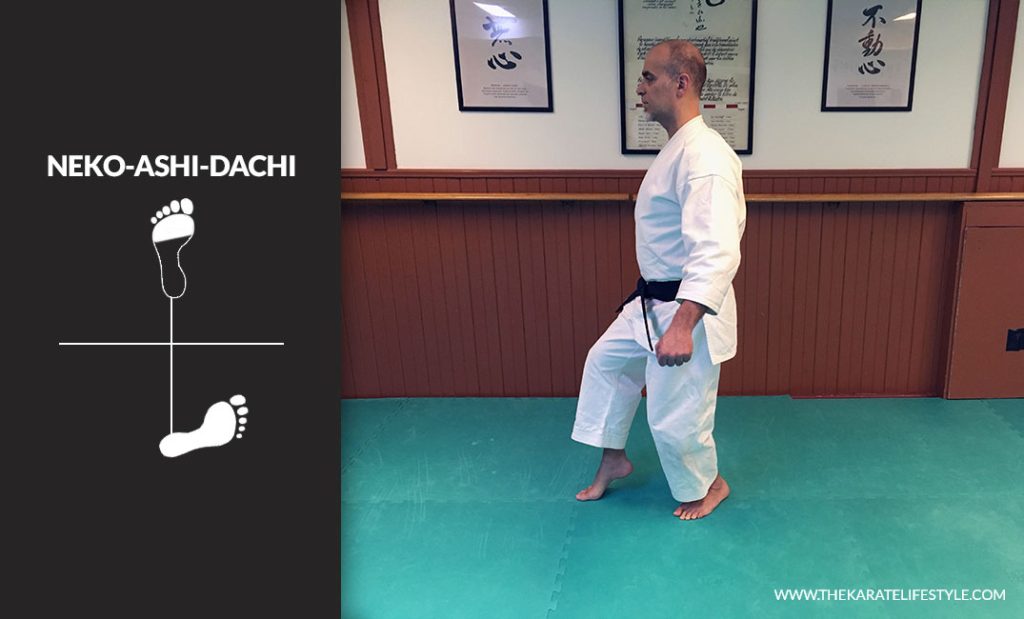
Kanji: 猫足立
English: Cat stance
Description: Neko-ashi-dachi is a great defensive stance as most of the weight is on the back leg, allowing counterattack with kicks and quick sideways evasions. Sadly unpopular with karateka this stance as perfectly suited for both self-defense and kumite.
Tsuru-ashi-dachi
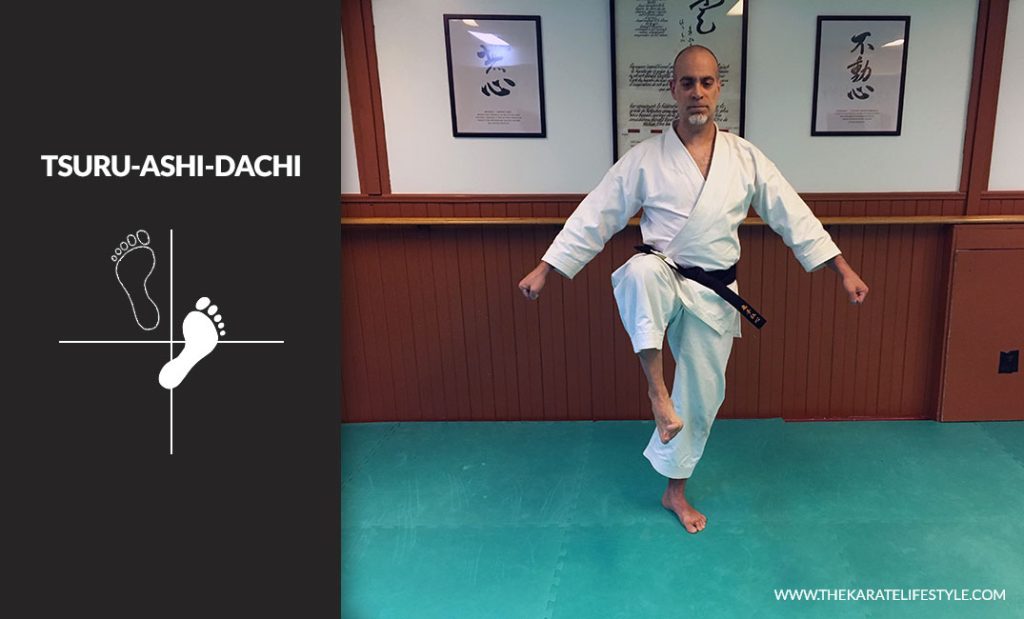
Kanji: 鶴足立
English: Crane stance
Description: Tsuru-ashi-dachi is a stance used to avoid attacks and to transition into other techniques.
Kosa-dachi
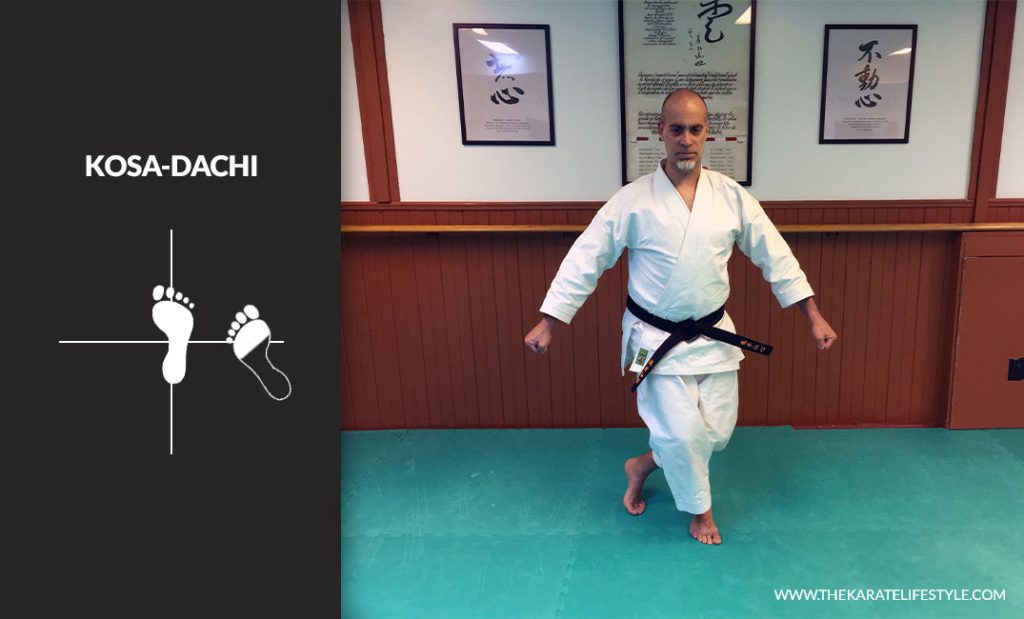
Kanji: 交差立
English: Cross stance
Description: The cross stance is generally performed for turning, dodging to the side or when landing from a jump.